Online vs In-Person Yoga Teacher Training: Which Should You Choose?
November 9, 2026·3 min read
The certificate can be identical. The experience is not. Here is what you gain and what you give up with online, recorded and residential yoga teacher training.
Choose a live online training if you need to keep your job and home life running, and a residential one if you can take a month away and want to be fully immersed. Both can lead to the same Yoga Alliance RYT 200 credential. The format you should avoid, if you want to teach well, is a purely recorded course with no live teacher watching you. That is the real dividing line: not online versus in person, but whether someone is watching and correcting you.
Three formats, not two
People talk about "online vs in-person", but there are really three options:
Recorded (self-paced). You watch videos and submit assignments. It is the cheapest and most flexible, and the weakest at correcting technique.
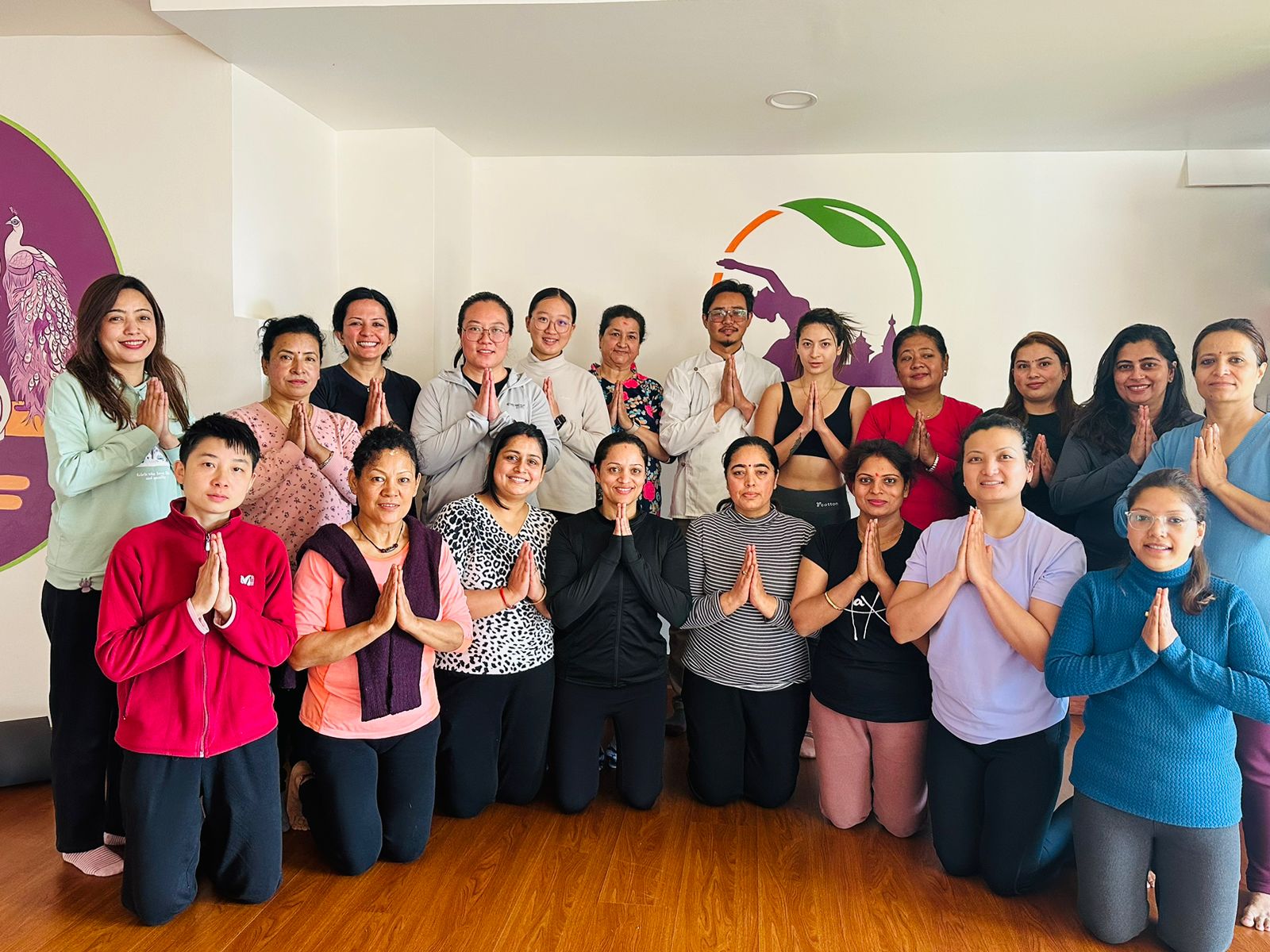
Live online. You join scheduled sessions over video, and a teacher can see you, correct you and hear you teach. You stay at home.
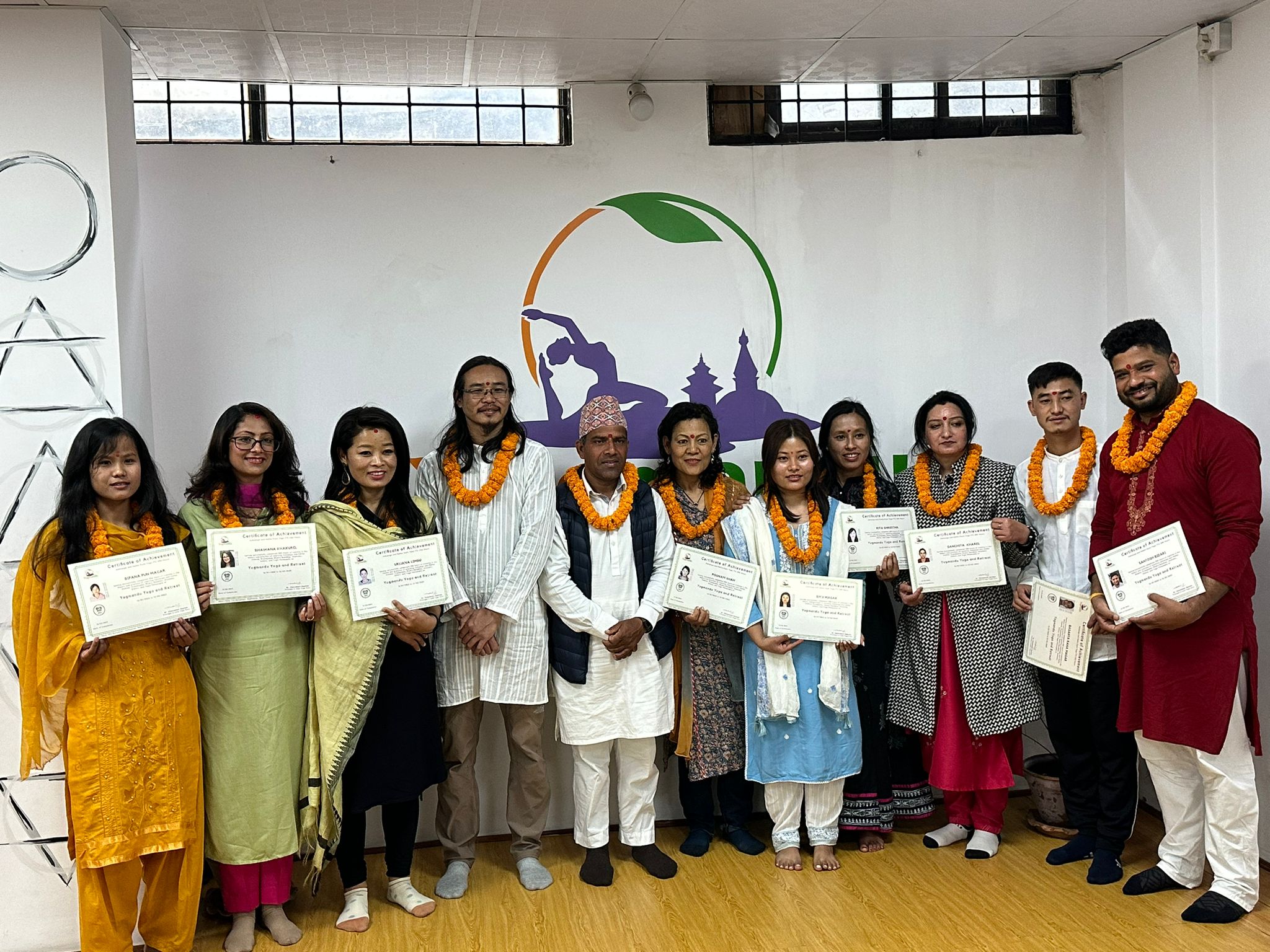
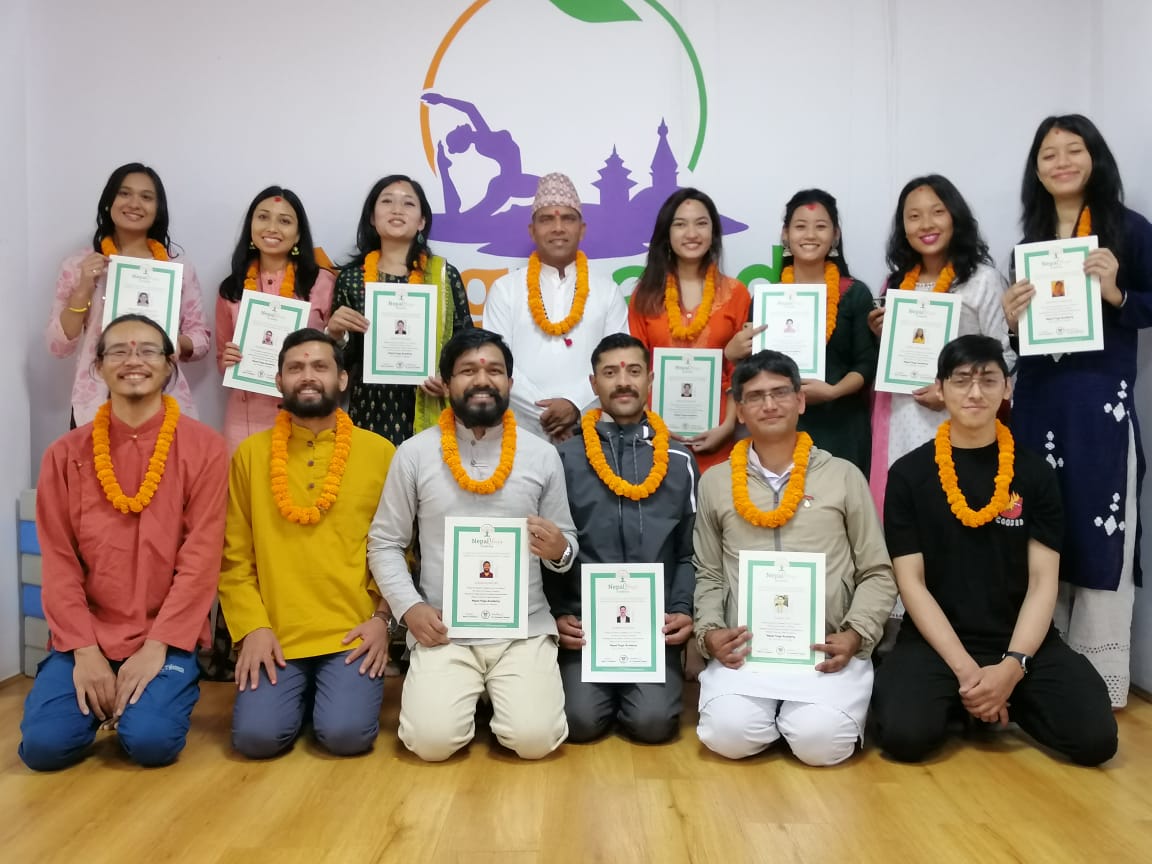
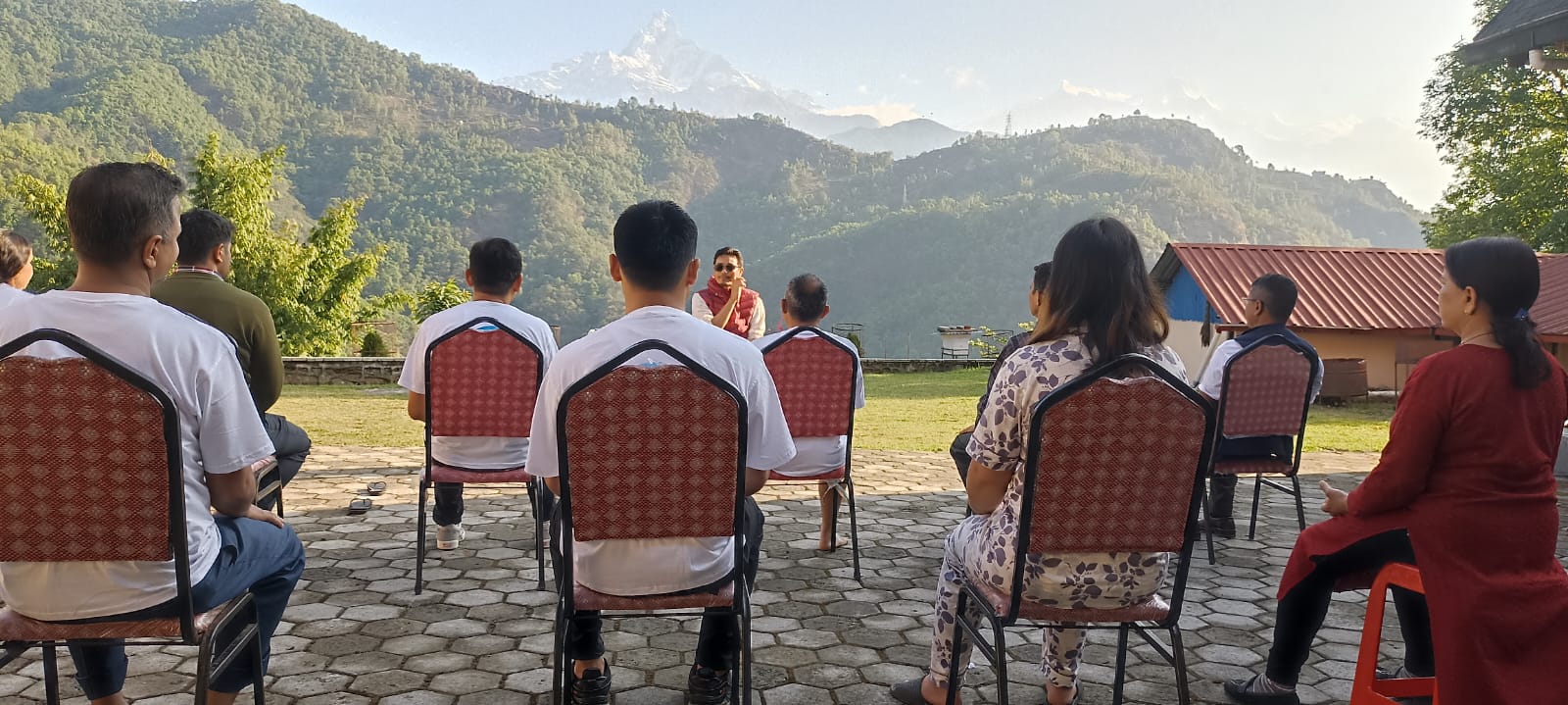
In person or residential. You practice and study in the same room as your teachers and cohort, often living on site.
Yoga Alliance allows registered schools to deliver training online, in person or as a hybrid, with a minimum number of live (synchronous) hours for online programs. Check the current standard on Yoga Alliance's site, because the rules have changed several times since 2020.
What live feedback is worth
Breathing technique is the part of yoga most often learned wrong, and it is almost impossible to correct on your own. A video cannot tell you that your shoulders rise on every inhale, or that the ratio you are counting is not the one you are actually breathing. The same is true of alignment, and even more true of teaching: you only learn to cue a room by cueing one and being told what landed.
That is why every session in Yogmandu's online program is live, not recorded, with Arjuna and the teaching team watching and correcting in real time.
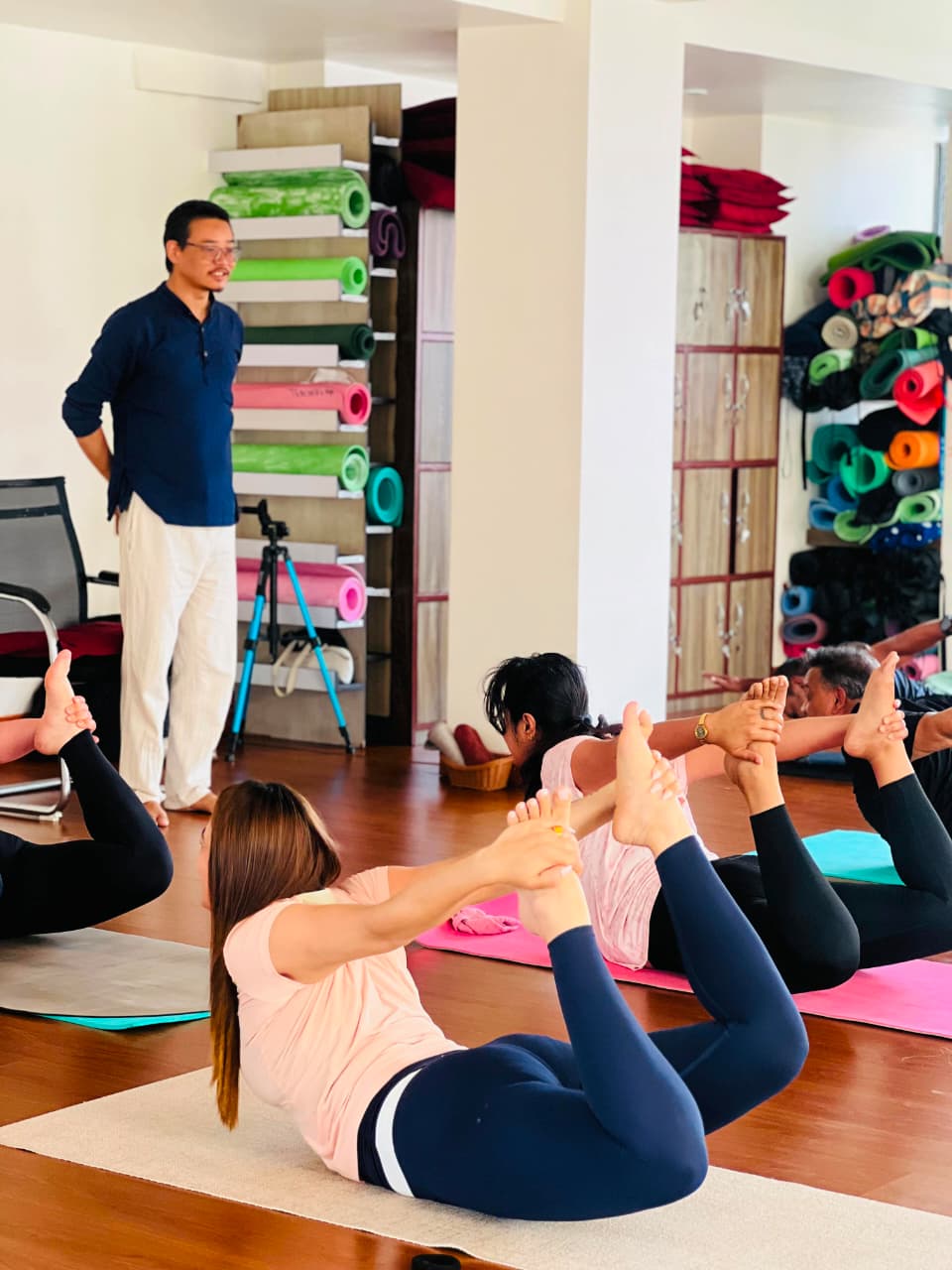
Side by side
Live online
Keep your job, home and routine
Lowest total cost: no flights, no room and board
Real-time correction from senior teachers
Practice teaching to real people over video
Harder to switch off from daily life; it takes discipline
You miss the cohort living together
Residential
Full immersion: practice, study, eat and rest on one schedule
The most hours of contact and the fastest progress
A cohort that often becomes lifelong friends
Hands-on adjustments and teaching in a real room
Requires around a month away, plus flights
Higher total cost, though room and meals are usually included
Time zones from the US
Kathmandu is 10 hours 45 minutes ahead of New York in winter (9 hours 45 minutes during US daylight saving time) and 13 hours 45 minutes ahead of Los Angeles in winter. That sounds awkward, but it works out well: a US evening is early morning in Kathmandu, and a US morning is the Kathmandu evening. Both are normal teaching hours in Nepal, so nobody has to practice at 3 a.m. Nepal does not observe daylight saving time, so session times shift by an hour in March and November, and we confirm the change with you.
Who should choose which
Live online suits you if:
you can't take a month off work or away from family
you want to test your commitment before traveling
you are on a tight budget
Residential suits you if:
you can take the time and want to go deep, fast
you learn best by doing, in a room, with others
the place itself is part of what you are looking for
You don't have to choose forever
Many students do both: start online, then come to Kathmandu for a retreat or the residential teacher training once they know this is what they want. Hours studied online with Yogmandu are recognized when you arrive.
Questions people ask
Is an online yoga certification respected?
The credential is the same: an RYT 200 from a Registered Yoga School. What studios judge is how you teach in your audition. A live program with real practice teaching prepares you for that. A recorded one usually does not.
How much does online yoga teacher training cost?
Much less than residential, because there is no accommodation or food. Yogmandu's current online rate is on the teacher training page.
What do I need at home?
A quiet room, a mat, somewhere firm to sit, and a camera placed so the teacher can see your whole body. Nothing else.
Study this in person
Classes, teacher training and retreats in Kathmandu, and live online sessions wherever you are.