अर्जुनArjuna

Gurukul · Teacher Training

Learn to teach from the source

Thousands travel east to become yoga teachers. Few study in Nepal — where the Himalayan tradition still lives in daily practice. Arjuna's residential, commuter and online trainings are small, rigorous and personal, led by an E-RYT 500 and YACEP with Yoga Alliance–recognized certification.

200-Hour Foundation

Residential · Commuter · Online

Aspiring teachers & dedicated students

The complete foundation: asana technique and alignment, the art of sequencing, pranayama, anatomy, yoga philosophy and supervised teaching practice. Graduate ready — and qualified — to teach anywhere in the world.

Curriculum

  • Classical Hatha & Ashtanga asana
  • Pranayama & meditation methodology
  • Applied anatomy & physiology
  • Yoga Sutras & Bhagavad Gita study
  • Teaching practicum from week one
  • The business & ethics of teaching

300-Hour Advanced

Residential · Commuter · Online

Certified teachers deepening their craft

For teachers ready to go beyond sequencing. Advanced pranayama and kriya, subtle-body anatomy, therapeutic adaptations, Sanskrit, and close mentorship with Arjuna — the training he wishes existed when he began teaching.

Curriculum

  • Advanced pranayama & kriya
  • Subtle anatomy: nadis, chakras, koshas
  • Therapeutic & adaptive teaching
  • Sanskrit for teachers
  • Personal mentorship with Arjuna
  • Advanced teaching practicum

Coming from the United States

What it costs, all in

Three ways to take the same Yoga Alliance qualification. The residential program is the one most students fly in for: tuition, a bed and every meal for the length of the course, so the number below is very close to what you will actually spend once you are here.

Residential · full board

$1,400

25 nights

USD 200 deposit on booking, USD 1,200 on arrival

Commuter · your own accommodation

$600

28 days

Tuition only — you arrange your own stay in Kathmandu

Online · live from anywhere

$500

Live sessions

Same Yoga Alliance RYT 200 certificate

The residential fee covers

  • Shared accommodation, 25 nights
  • Three organic vegetarian meals daily
  • Unlimited herbal teas
  • Shatkarma (cleansing) kit
  • Two Ayurvedic massages
  • Training manual and notebook
  • Yoga Alliance RYT 200 certificate

Rates shown are the international student rates in US dollars. Nepali citizens pay published NPR rates — ask us. Flights, visa and personal spending are not included. The 300-hour advanced program is quoted on enquiry.

Before you book

Questions from American students

Is the certificate recognised in the United States?

Yes. Yogmandu is a Yoga Alliance Registered Yoga School (RYS 200, RYS 300 and RYS 500). Graduates register directly with Yoga Alliance as an RYT 200 and can teach at studios across the US on the same footing as someone trained in Denver or Brooklyn — the registration is the credential, not the country it was earned in.

How does the cost compare with training in the US?

A comparable 200-hour training in the US commonly runs several thousand dollars in tuition alone, before you have paid for anywhere to sleep. Our residential rate covers 25 nights' accommodation and three meals a day as well as the training itself — the rates are set out in full above. For many American students the flight still costs less than the difference.

Do I need a visa, and how hard is it to get?

US passport holders can obtain a Nepali tourist visa on arrival at Tribhuvan International Airport in Kathmandu — you fill in a form, pay the fee in cash and walk through. Choose a duration that comfortably covers your course plus any travel either side. Requirements do change, so confirm the current rules with the Nepali embassy before you book flights.

How long is the flight from the US?

There are no direct flights. Most American students connect through Doha, Istanbul, Delhi or Bangkok, which puts total travel somewhere around 20 to 24 hours from the East Coast and longer from the West. Give yourself a day in Kathmandu before the course starts — the time difference is substantial and you will want to arrive rested.

Is Kathmandu at high altitude? Will I struggle to breathe?

No. Kathmandu sits at roughly 1,400 metres — about 4,600 feet, a little lower than Denver. There is no acclimatisation period and no altitude sickness risk in the city itself. The Himalayan views come from the ridges around the valley, not from the elevation you are training at.

When do trainings start?

Intakes run monthly, year round, rather than in fixed semesters. That means you can generally start within a month or two of deciding. Write to us with the months that work for you and we will confirm the next cohort and hold you a place.

What exactly does the residential fee cover?

Shared accommodation for 25 nights, three organic vegetarian meals a day, unlimited herbal teas, a shatkarma cleansing kit, two Ayurvedic massages, your training manual and notebook, and the Yoga Alliance RYT 200 certificate on completion. Flights, visa and personal spending are not included.

Do I need to be an advanced practitioner?

No. The 200-hour is a foundation course and is built for dedicated students who want to understand the practice properly, whether or not they ever teach. If you can hold a regular practice and you are curious about the why underneath it, you are ready.

Is it safe to come on my own?

Most students arrive alone and leave having made close friends — cohorts are deliberately small. Airport pickup is arranged, the campus is in a residential part of Kathmandu, and there is always someone on hand. Solo women students make up a large share of every intake.

Recent graduating classes

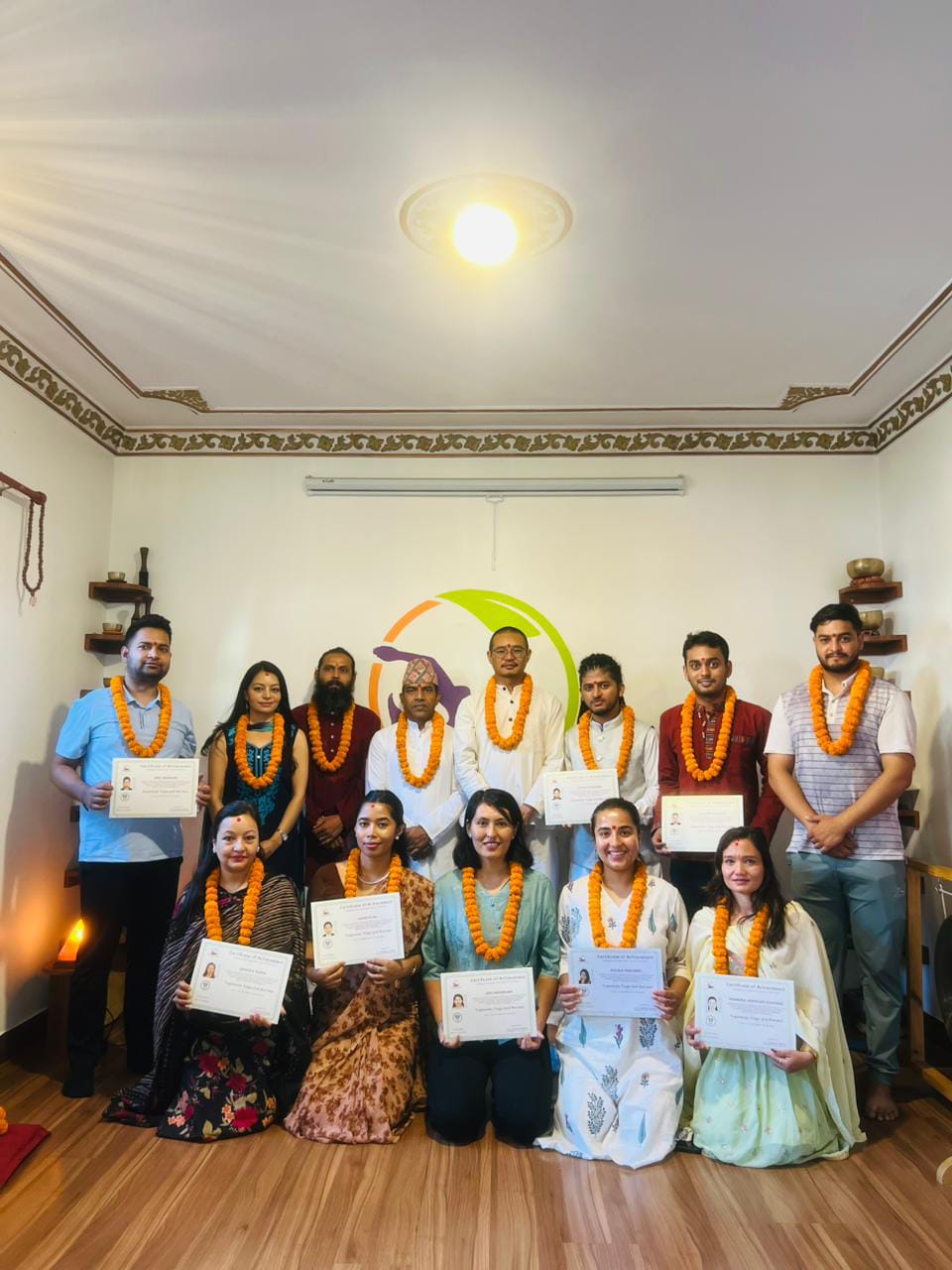
Yoga teacher training graduates with certificates and marigold garlands at Yogmandu, Kathmandu, Nepal
200-hour · Certification day
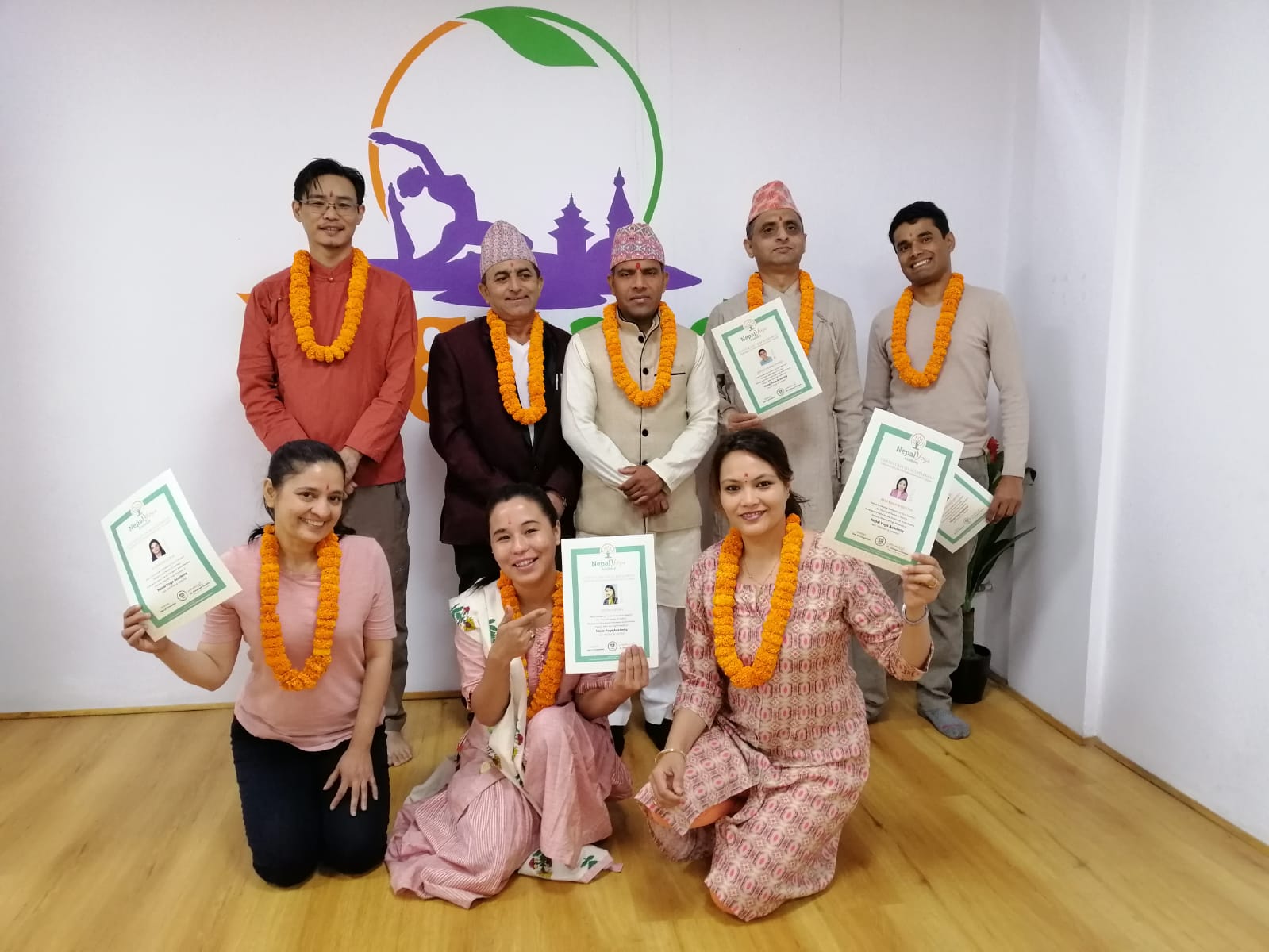
Graduating class of an internationally recognised yoga teacher training at Yogmandu school in Nepal
The gurukul · Small cohorts
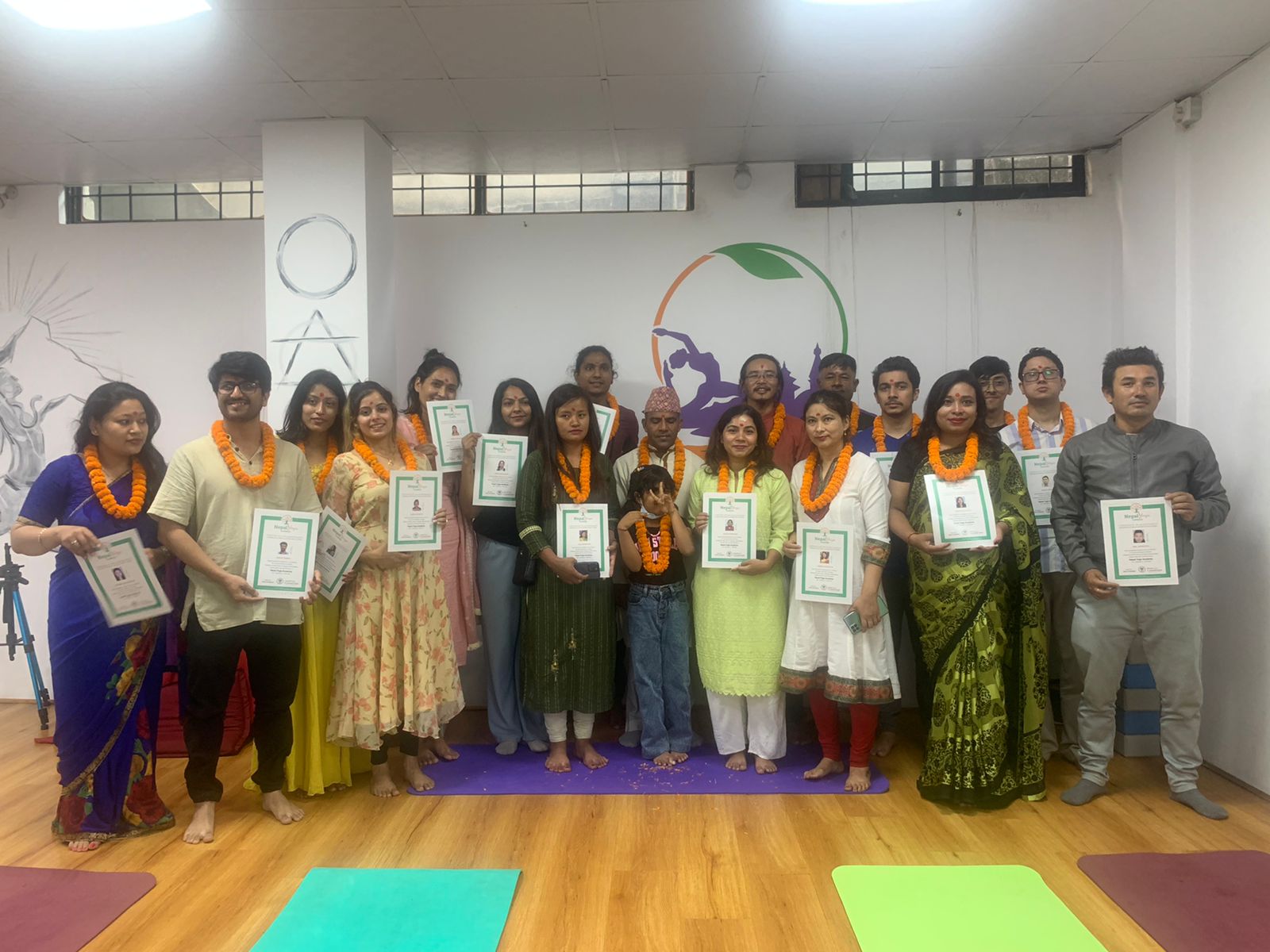
International students celebrating yoga teacher training graduation in Kathmandu, Nepal
Graduates · 50+ countries

Why train in Nepal?

Because context is everything. Here, your morning practice faces the mountains that shaped the tradition. Your teachers grew up inside it. Your certificate carries the weight of the place where yoga’s highest peaks still stand.