Bhramari Pranayama (Humming Bee Breath): Steps, Benefits and Mistakes
November 9, 2026·4 min read
A soft hum on the exhale that turns your attention inward almost immediately. Bhramari is the gentlest door into meditation, and the first practice Arjuna gives to anxious minds.
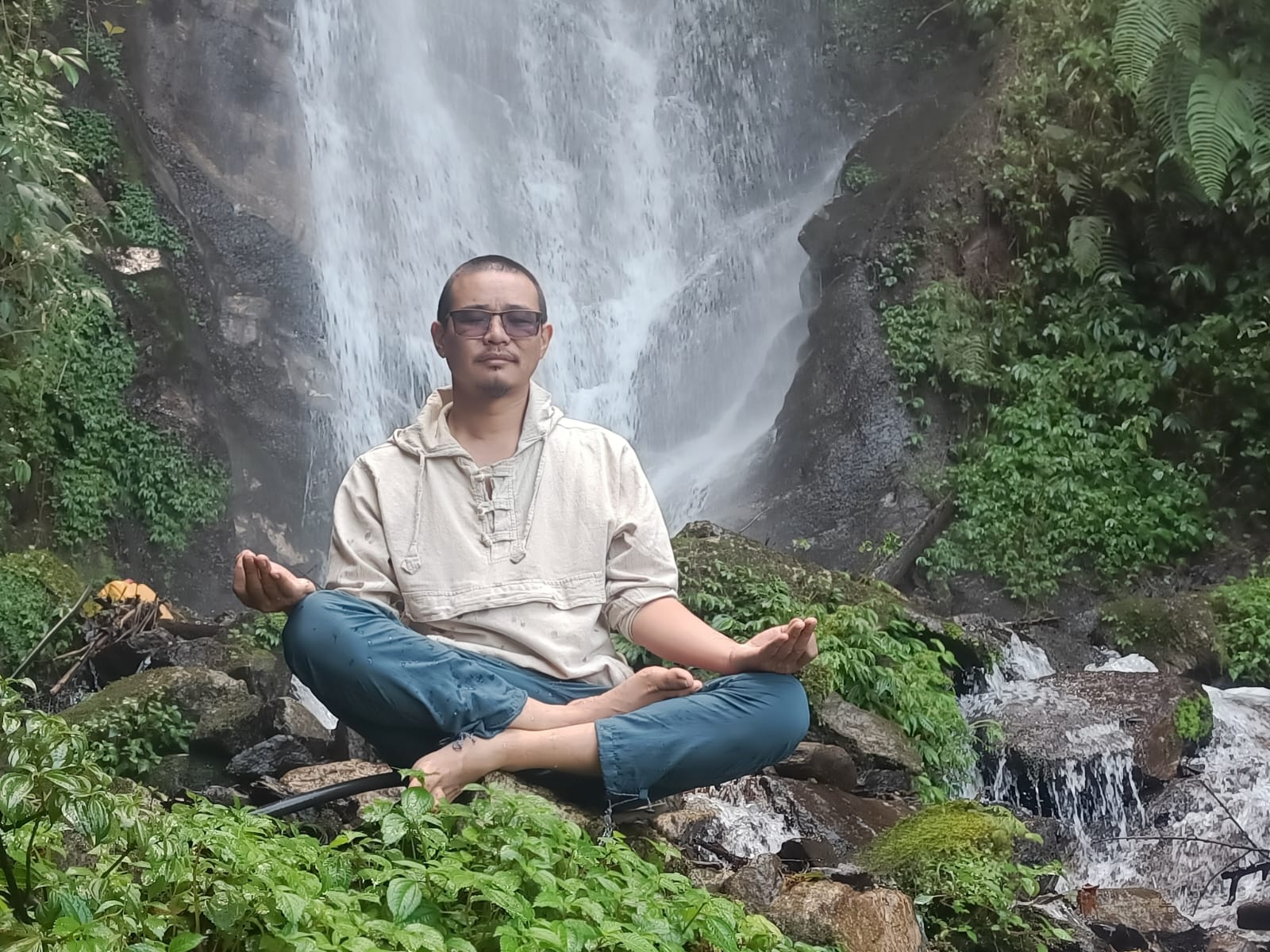
Bhramari pranayama, the humming bee breath, is a simple yogic breathing practice: you inhale through the nose, then exhale slowly while making a steady, low humming sound with the mouth closed. It takes a minute to learn, is safe for almost everyone, and calms the mind faster than almost any other technique. Arjuna recommends it as a first practice for anxious, racing minds and as a bridge into meditation.
The name comes from bhramara, the Sanskrit word for a black bee, because the sound resembles a bee's hum. The practice is described in the Hatha Yoga Pradipika, one of the classical texts of hatha yoga.
How to do Bhramari, step by step
Sit comfortably with a straight spine, on a cushion or a chair. Relax your shoulders and jaw.
Close your eyes. Rest your hands on your knees.
Optional: close your ears. Gently press the small flap of cartilage at the front of each ear (the tragus) with your index fingers. This is called shanmukhi mudra in its fuller form. It makes the sound louder inside your head.
Inhale slowly through the nose. Don't force it.
Exhale slowly through the nose, humming with your lips closed and your teeth slightly apart. Make the sound steady and low, like "mmmm". Let the exhale be longer than the inhale.
Feel the vibration in your face, head and chest.
Repeat for five to ten rounds. Then sit quietly with your eyes closed for a minute and notice how you feel.
Start with five rounds. Over time you can build up to ten minutes.
Benefits: what the research says
The traditional claim is that Bhramari quiets the mind and turns the attention inward. Modern research is small but points the same way:
A study of 60 adolescents published in a peer-reviewed journal found that Bhramari practice significantly reduced heart rate and several blood pressure measures compared with a control group.
A study at Nepal Medical College found that five minutes of slow Bhramari breathing lowered blood pressure and slightly reduced heart rate in healthy volunteers.
A 2023 trial in hypertensive patients comparing a single session of Bhramari with Nadi Shodhana found no significant difference between the two in heart rate variability.
So the evidence suggests short-term calming effects, but the studies are small and mostly short. Bhramari is a good tool for calming down. It is not a treatment for high blood pressure. If you have hypertension, keep your treatment going.
Why might it work? Two reasons are commonly given. The long exhale slows the breath, which shifts the nervous system toward rest. And the hum gives a wandering mind something simple to rest on, which is why it works so well as a doorway into meditation.
Common mistakes
Humming too loudly or too high. The sound should be soft and low, felt more than heard.
Forcing the inhale. Breathe in naturally. The work is in the long, even exhale.
Pressing the ears too hard. A light touch on the tragus is enough. Never push fingers into the ear canal.
Clenching the jaw. Keep the teeth slightly apart and the face soft.
Lifting the shoulders. Watch for it on every inhale. This is exactly the kind of habit a teacher spots and you can't see yourself.
Practicing lying down. Sit upright; lying down tends to send you to sleep.
Who should take care
Bhramari is one of the gentlest pranayamas, but:
If you have an ear infection, skip the ear closure, or skip the practice until it clears.
If you feel dizzy, return to normal breathing.
If you are pregnant, practice gently, without straining, and check with your doctor or midwife.
When to practice
Before meditation, to settle a busy mind
Before sleep, five rounds in bed, sitting up
During a stressful day, even three rounds at your desk with your ears open
After asana, before relaxation
Where Bhramari fits in pranayama
In the tradition Arjuna teaches, Bhramari is one of eleven classical pranayamas, learned in order. Nadi Shodhana usually comes first, and Bhramari soon after, because it is so gentle. It is also a good antidote to the faster, more intense breathing styles popular in the US. We compare those in Breathwork vs pranayama.
If you want someone to watch your Bhramari and correct it, Arjuna teaches pranayama live online on US time zones and in person in Kathmandu.
Questions people ask
How long should I do Bhramari?
Five to ten rounds is enough to start. Build up to five or ten minutes a day.
Can I do Bhramari for anxiety?
Yes. It is one of the most commonly recommended practices for an anxious mind. If anxiety is severe or long-lasting, work with a clinician as well.
Should I close my ears?
It is optional. Closing the ears makes the inner sound stronger and more absorbing, but the practice works without it.
Study this in person
Classes, teacher training and retreats in Kathmandu, and live online sessions wherever you are.