Planning a Yoga Trip to Nepal From the US: Visas, Flights, Seasons and Safety
November 9, 2026·4 min read
The US is now Nepal's largest source of visitors. If you're one of them and yoga is the reason, here is everything practical: visas, flights, seasons, altitude, safety and what to bring.
For a yoga trip to Nepal from the US, you need a passport valid for at least six months, a Nepali tourist visa (available on arrival in Kathmandu, or online in advance), a connecting flight through the Middle East or Asia, and ideally travel dates in spring (March to May) or autumn (September to November). Kathmandu is at about 4,600 feet, so altitude is not a concern in the city. The US State Department currently rates Nepal at Level 2, "exercise increased caution."
More Americans are making this trip than ever. In October 2026, the United States became Nepal's largest source of foreign visitors for the first time, with 17,437 arrivals, according to Nepal Tourism Board figures reported by the Kathmandu Post. Here is what you need to know.
Visa
US passport holders can get a tourist visa on arrival at Tribhuvan International Airport in Kathmandu. Since August 2026, Nepal has also run an online ETA/eVisa system you can use before you fly. For visa-on-arrival nationalities like the US it is optional, but it can shorten your time at the airport.
Visas are sold for 15, 30 or 90 days, with fees tiered by length.
Pay at the airport in cash. Bring US dollars in clean, newer bills.
Your passport must be valid for at least six months from your entry date.
If you apply online, enter your passport details exactly. A typo can stop the authorization matching your passport.
Choose a visa that covers your course plus any travel either side. Rules and fees change, so always check the Department of Immigration before you book.
Flights
There are no direct flights from the US to Nepal. Most Americans connect through Doha, Istanbul, Delhi or Bangkok. Expect around 20 to 24 hours of total travel from the East Coast, and longer from the West Coast.
Arrive at least a day before your course or retreat starts. Kathmandu is 10 hours 45 minutes ahead of New York in winter, and 9 hours 45 minutes during US daylight saving time.
Airport pickup is arranged for Yogmandu teacher training students and retreat guests, so you won't have to find your way at night after a long flight.
When to go
Autumn (September to November): clear skies, mountain views and festival season. The most popular time.
Spring (March to May): warm days and rhododendrons in bloom. Haze can soften mountain views later in the season.
Winter (December to February): cold mornings, but Kathmandu days are often sunny and the city is quieter.
Monsoon (June to August): heavy rain, especially in the afternoons. Indoor training continues, but mountain travel is harder.
Yogmandu's teacher training runs monthly, all year round, so you can choose your season. Retreat dates are released seasonally.
Altitude
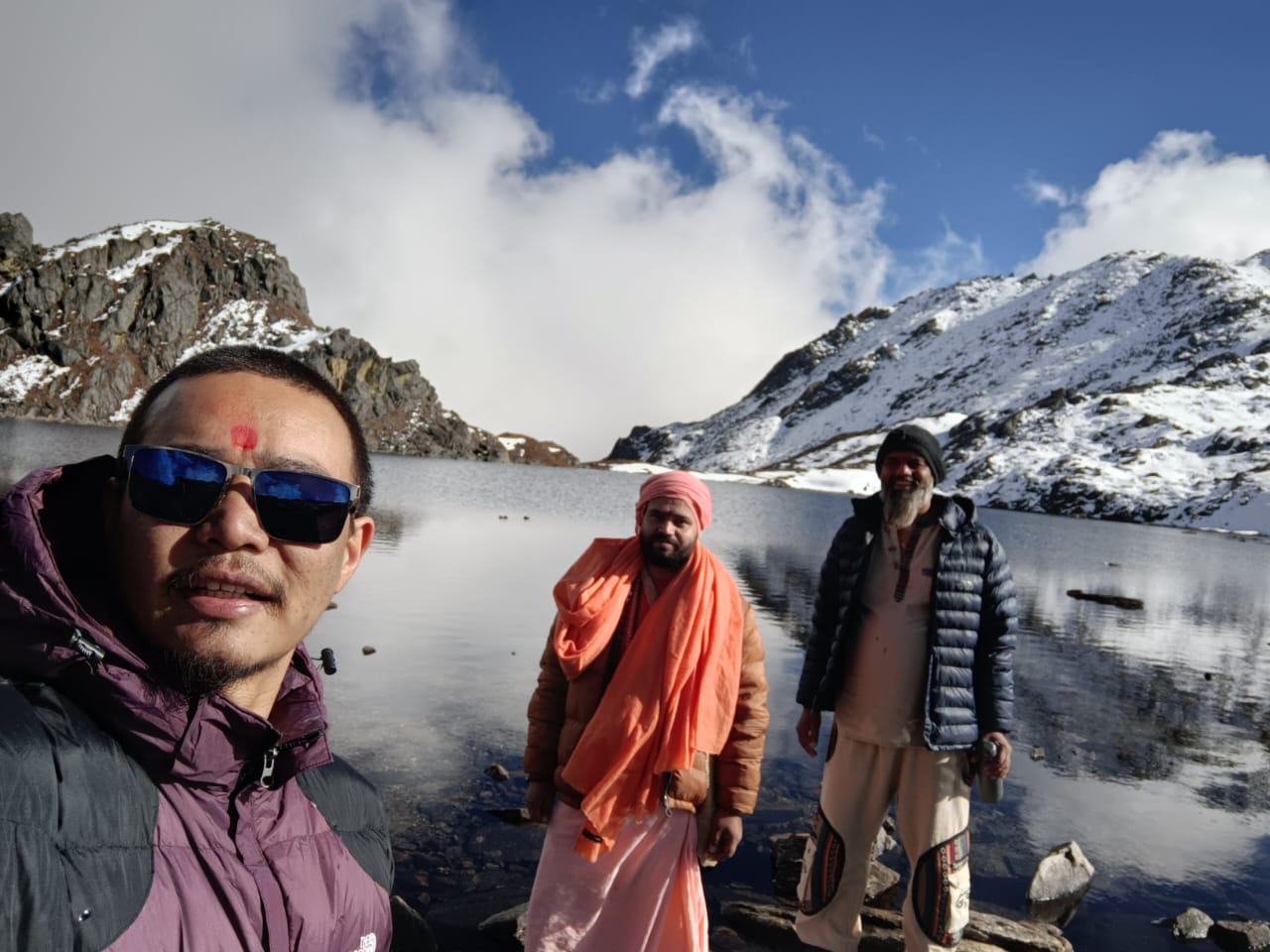
Kathmandu sits at roughly 1,400 meters, about 4,600 feet, a little lower than Denver. There is no acclimatization period and no altitude sickness risk in the city. Our weekend retreat on the Nagarkot ridge is at 2,175 meters (about 7,100 feet), which most people manage comfortably. If you plan a high trek after your course, follow proper acclimatization guidance; that is a different matter from staying in the valley.
Safety
The US State Department rated Nepal Level 2, "exercise increased caution," in its March 2026 advisory, citing civil unrest. A September 2026 update reportedly placed parts of Rasuwa district near the China border at Level 4. Read the current advisory before you go, and consider enrolling in the State Department's STEP program.
Health care outside the main cities is limited. Get travel insurance that covers medical evacuation.
Solo travelers: most of our students arrive alone, and solo women make up a large share of every intake.
Food and water: drink filtered or bottled water. Residential teacher training at Yogmandu includes three vegetarian meals a day.
What to pack for a yoga trip
Loose, modest clothing that covers shoulders and knees for temples
Layers: mornings are cool, especially October to March
A warm jacket if you are joining a mountain retreat
A refillable water bottle and a basic first-aid kit
Your own mat if you are particular about it
US dollars in cash for the visa
A universal plug adapter (Nepal uses types C, D and M)
Which kind of trip is right for you?
A short reset as part of a wider Nepal itinerary: a weekend retreat above the Kathmandu Valley
A week of real practice: a seven-day immersion in the Himalayan foothills
A month to become a teacher: the residential 200-hour teacher training
A visit to rest: daily classes, sound healing, pranayama and meditation in Kathmandu
Not ready to fly? Arjuna teaches live online on US time zones, and many students start that way and come to Nepal later.
Questions people ask
How far in advance should I book?
Two to three months is comfortable for a retreat or training. That gives you time to find a sensible flight and sort out your visa without rushing.
Do I need vaccinations?
Check the CDC's Nepal travelers' health page and talk to a travel clinic about six weeks before departure.
Can I use credit cards in Nepal?
In Kathmandu's hotels and larger shops, often yes. Carry cash for taxis, small shops, temples and the visa counter.
When you know roughly when you want to come, write to us. We'll confirm dates and hold you a place.
Study this in person
Classes, teacher training and retreats in Kathmandu, and live online sessions wherever you are.