Sound Bath vs Sound Healing: What's the Difference?
November 9, 2026·4 min read
The two names get used interchangeably, but they describe different experiences. Here is what actually happens in each, what the research says, and which to book first.
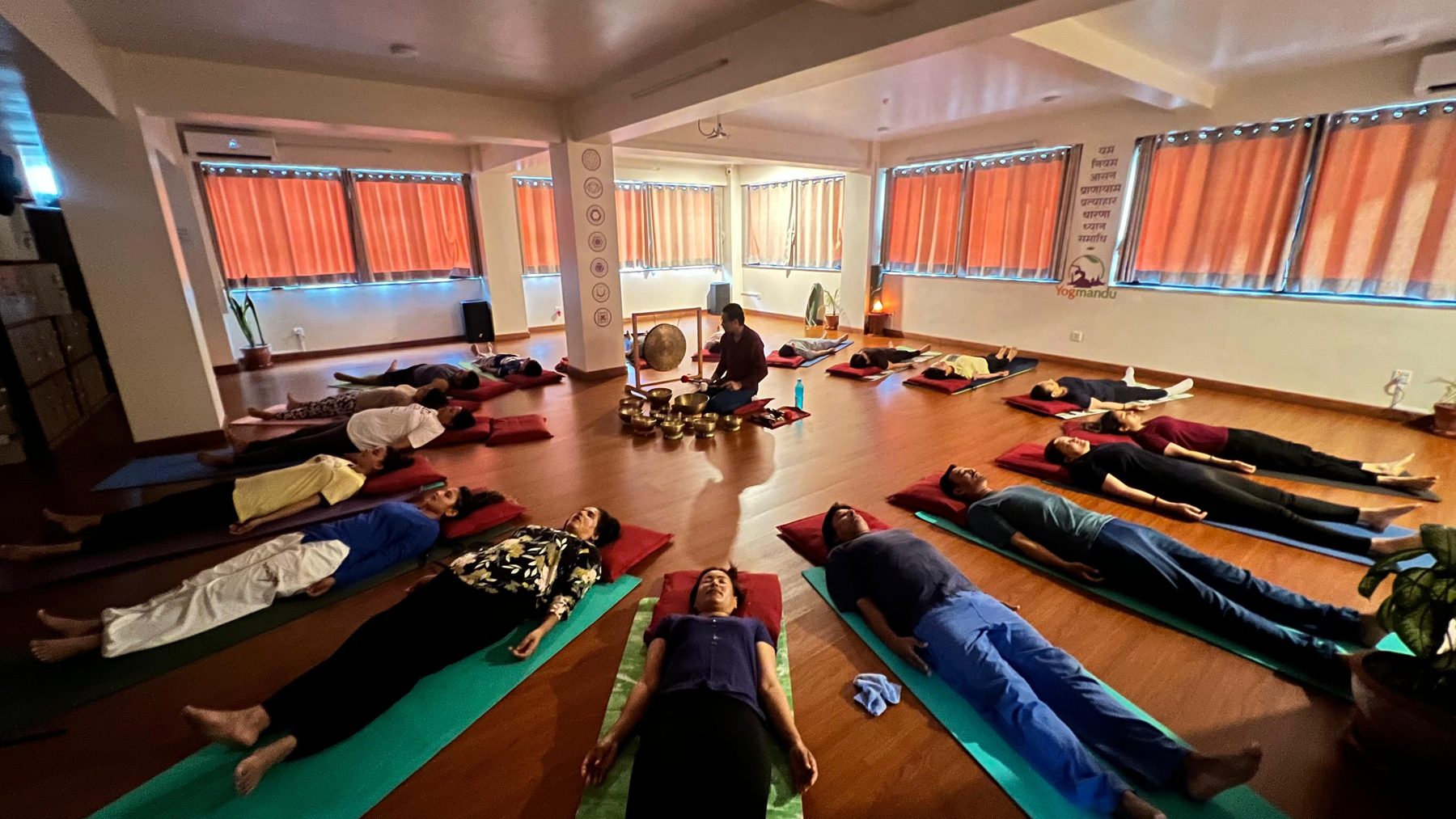
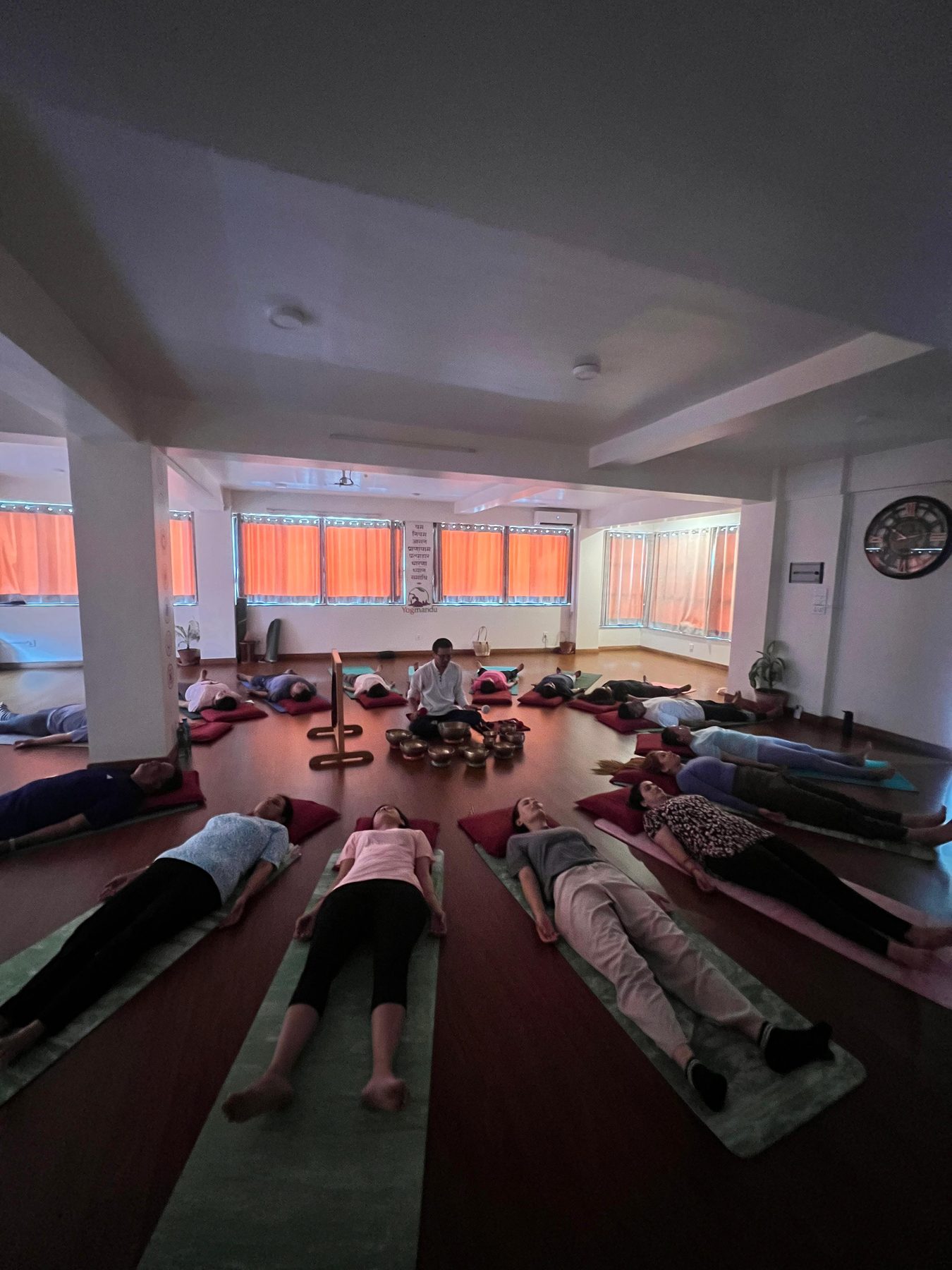
A sound bath is a group session: everyone lies down while a practitioner plays bowls, gongs and other instruments around the room. Sound healing usually means a one-to-one session in which bowls are played around you and often placed directly on your body, so you feel the vibration as well as hear it. Both ask you to do nothing but rest. The difference is how personal the session is, and whether the sound reaches you through the air or through your body.
Sound baths have become one of the fastest-growing wellness searches in the US over the past few years. That popularity has blurred the language, so here is what each term usually means in practice.
What happens in a sound bath
You lie on a mat, usually with a bolster under your knees and a blanket.
A practitioner plays singing bowls, a gong, chimes or other instruments for the room.
You are never touched. The sound comes to you through the air.
Sessions run for roughly an hour and are often held in yoga studios, at events or for teams.
A sound bath is a good first step. It costs less than a private session, there is nothing to learn, and if you don't like it you have lost an hour lying down.
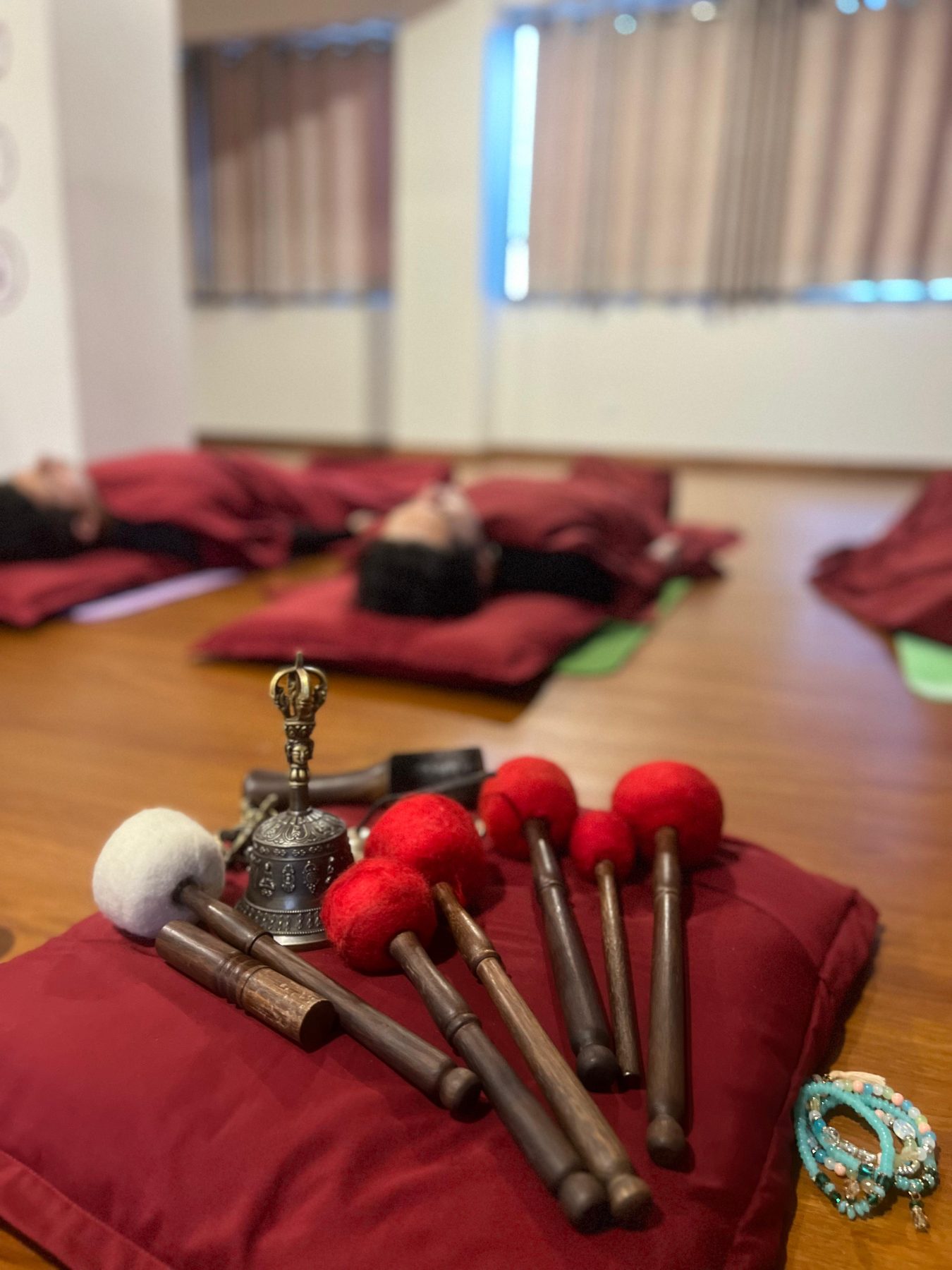
What happens in a sound healing session
It is usually one-to-one, though some forms work for small groups.
The practitioner sits beside you with a set of hand-hammered Himalayan bowls and smaller instruments.
Bowls are often placed on your body (on the chest, abdomen, back or legs) and struck, so the vibration travels through you.
The session is shaped around what you bring: sleep, tension, a mind that will not settle.
You stay fully clothed throughout.
At Arjuna's studio in Kathmandu there are twelve distinct sound therapies, each with its own purpose. They range from full-body bowl placement to a chakra sequence worked from crown to root, to paired-frequency sessions people book for sleep and focus. The group sound bath is one of the twelve.
What does the research say?
Honestly: the signal is real but modest.
A 2025 systematic review in the journal Healthcare gathered fourteen quantitative studies of Tibetan singing bowl interventions. It concluded they show potential for reducing stress and improving psychological well-being, with most studies reporting less anxiety, improved heart rate variability and a lower heart rate.
The same review was candid that the evidence was low to moderate in certainty, samples were small, and few studies followed people up over time.
An earlier study by Goldsby and colleagues (2017) found participants reported less tension, anger, fatigue and depressed mood after a singing bowl meditation.
So sound baths and sound healing are reasonable tools for rest and stress relief. They are not a treatment for disease, and anyone who tells you otherwise is going beyond the evidence. If you are being treated for something, keep being treated for it.
Which should you book?
Book a sound bath if:
you are curious and want a low-cost first try
you want to go with friends, family or your team
you like the idea of resting in a group
Book a one-to-one sound healing session if:
you have a specific reason: poor sleep, tension, a restless mind
you want to feel the vibration through the body, not just hear it
you find group settings hard to relax in
Not sure? Start with a group sound bath and decide afterward. That is what we suggest to most people.
Who should tell the practitioner first
Sound work is gentle, but tell the practitioner beforehand if any of these apply. None of them rules you out; they change how the session is run.
You are pregnant.
You have epilepsy.
You have an ear condition or wear a hearing aid.
You are being treated for a psychiatric condition, or have a history of trauma.
We cover side effects in more detail in Sound bath side effects: what is normal and who should be careful.
Questions people ask
Do I need any experience?
None. You need no flexibility, no practice and no particular belief.
How will I feel afterward?
Most people feel calm, clear and lighter. Some feel sleepy, others energized. Drink water and take the rest of the day gently.
Can I learn to give sound healing myself?
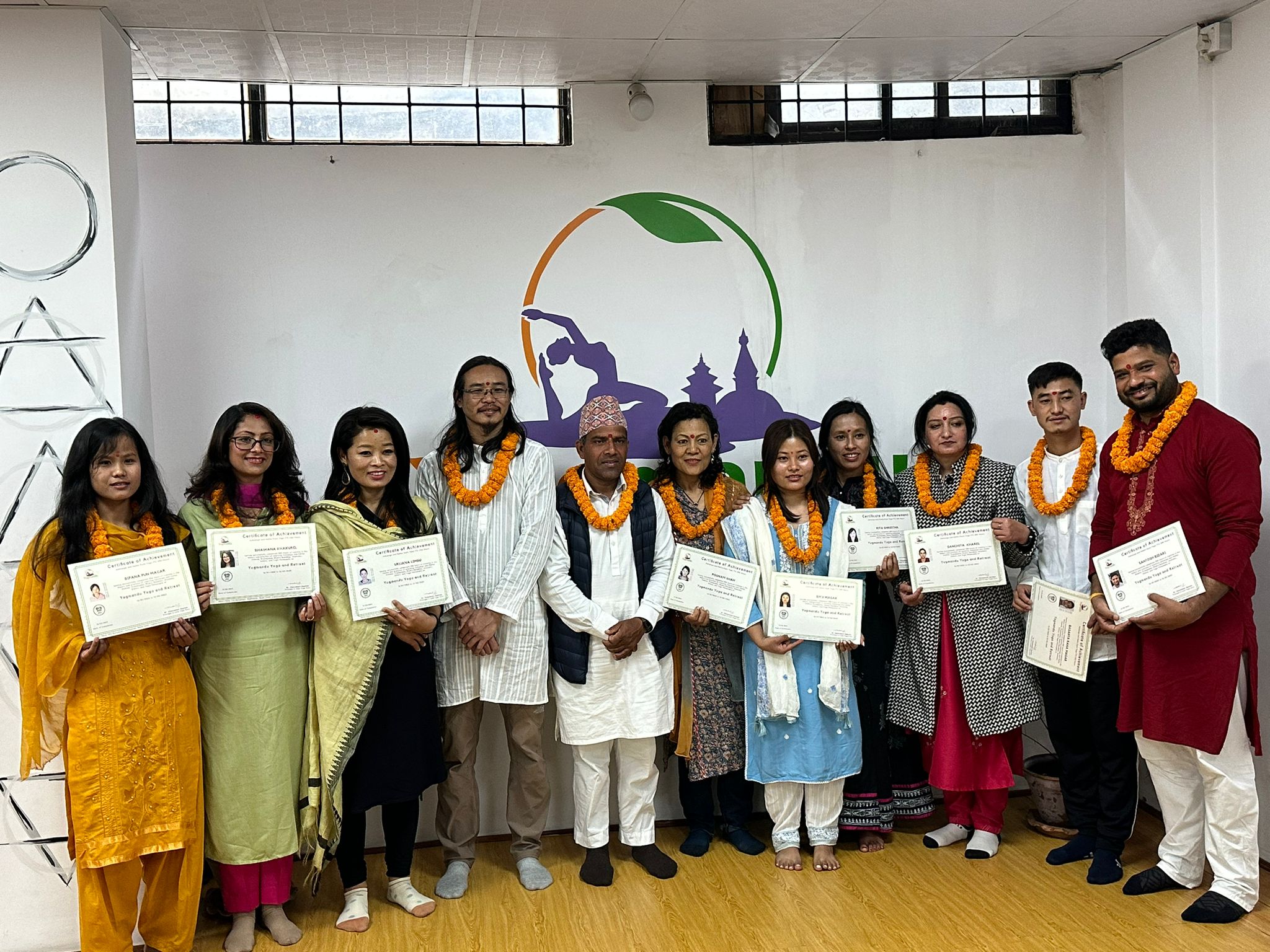
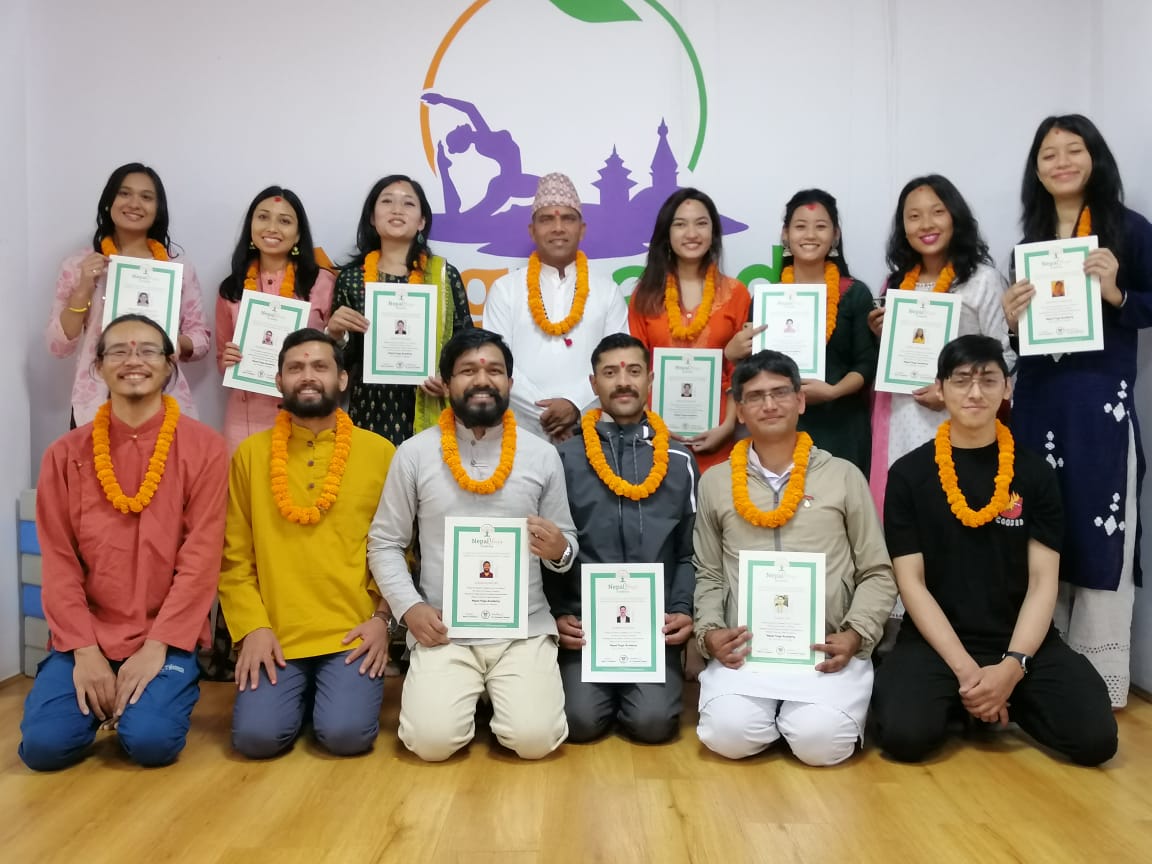
Yes. Arjuna teaches a 20-hour Level I certification for complete beginners and a Level II for professional client work. The schedule is flexible, so you can fit it around a visit to Kathmandu.
Is there anything like this online?
A sound bath can be streamed, but placing bowls on the body cannot. If you can't travel, live online meditation and pranayama give you a similar way into deep rest.
Study this in person
Classes, teacher training and retreats in Kathmandu, and live online sessions wherever you are.