Yoga Nidra vs NSDR: Is Non-Sleep Deep Rest the Same Thing?
November 9, 2026·3 min read
NSDR went viral as a science-backed reset. Most of it is yoga nidra, an old practice with a new name. Here is what you lose and keep when you strip the tradition out.
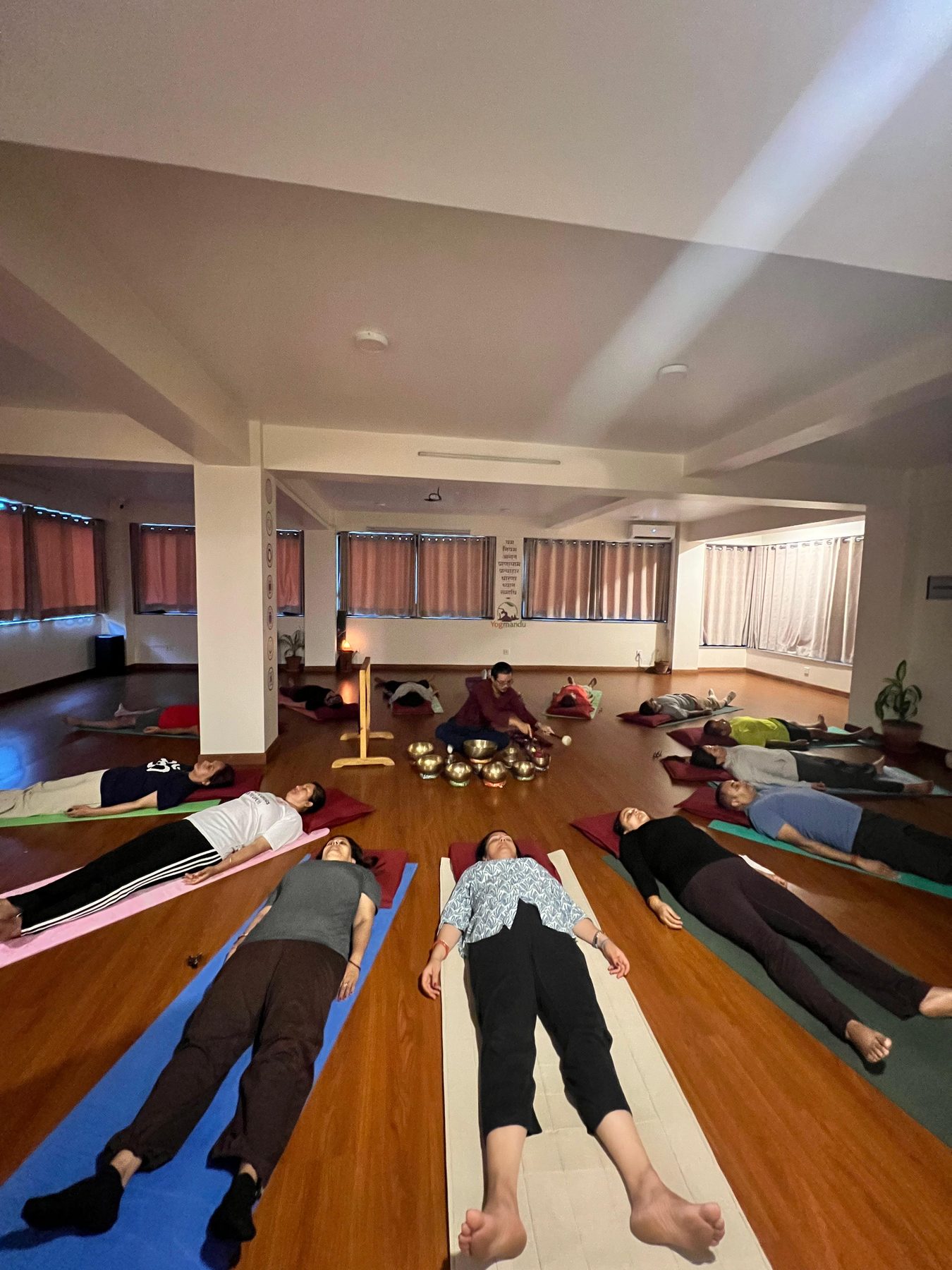
NSDR (non-sleep deep rest) is a modern, secular name for a practice that is largely yoga nidra: lying still while a voice guides your attention through the body and the breath, so you rest deeply without falling asleep. Most NSDR scripts are yoga nidra with the intention-setting, imagery and Sanskrit removed. The core technique is the same. What differs is the framing, and, in a traditional class, the depth.
The term "NSDR" spread quickly in the US through podcasts and social media, and it is now one of the most common things people search alongside yoga nidra. That is good news: more people are lying down and resting on purpose. It is worth knowing where the practice comes from, though, because the original has more to offer than the ten-minute version.
What yoga nidra is
Yoga nidra means "yogic sleep". It is a guided practice done lying in savasana. In the form most widely taught today, systematized by Swami Satyananda Saraswati in the twentieth century from older tantric practices, a session usually moves through these stages:
Settling: lying still and noticing sounds and the body
Sankalpa: a short, personal resolve repeated silently
Rotation of awareness: moving attention quickly through each part of the body
Breath awareness: often counting breaths
Opposite sensations: heaviness and lightness, heat and cold
Visualization: a sequence of images
Return: repeating the sankalpa and coming back slowly
The aim is a state between waking and sleep: the body fully at rest, the mind still present.
What NSDR keeps, and what it drops
Most NSDR recordings keep:
lying still
the body scan (rotation of awareness)
slow breathing, often with long exhales
Most drop:
the sankalpa
visualization
the contemplative frame: yoga nidra is traditionally a doorway into meditation, not only a recovery tool
If what you want is a reset between meetings, NSDR does the job. If you want the practice to change how you relate to your own mind over time, the full form goes further.
What the research shows
The evidence is promising but small. Be wary of anyone who tells you otherwise.
A 2021 randomized trial at AIIMS New Delhi compared yoga nidra with cognitive behavioral therapy for insomnia (CBT-I) in 41 patients with chronic insomnia. The yoga nidra group showed improvements in deep sleep, time spent awake and self-reported sleep quality.
Reviews of yoga nidra trials report improvements in how long it takes to fall asleep and in sleep efficiency, but the studies are mostly small.
There is little research on "NSDR" as a separate thing. Its evidence base is essentially yoga nidra's.
Neither is a substitute for sleep. If you have chronic insomnia, CBT-I is still the first-line treatment, and yoga nidra is a reasonable companion to it.
How to start
Lie down on a mat or bed, with a pillow under your knees.
Use a guide. Yoga nidra is almost always led by a voice, live or recorded.
Start with 20 to 30 minutes. Short NSDR sessions of ten minutes help, but the deeper stages need time.
Don't worry if you fall asleep. It happens to everyone at first. With practice you stay aware longer.
Practice at the same time each day. The early afternoon slump and the hour before bed are both good.
Yoga nidra, sound and the breath
Yoga nidra pairs naturally with two other practices taught at Arjuna's studio in Kathmandu:
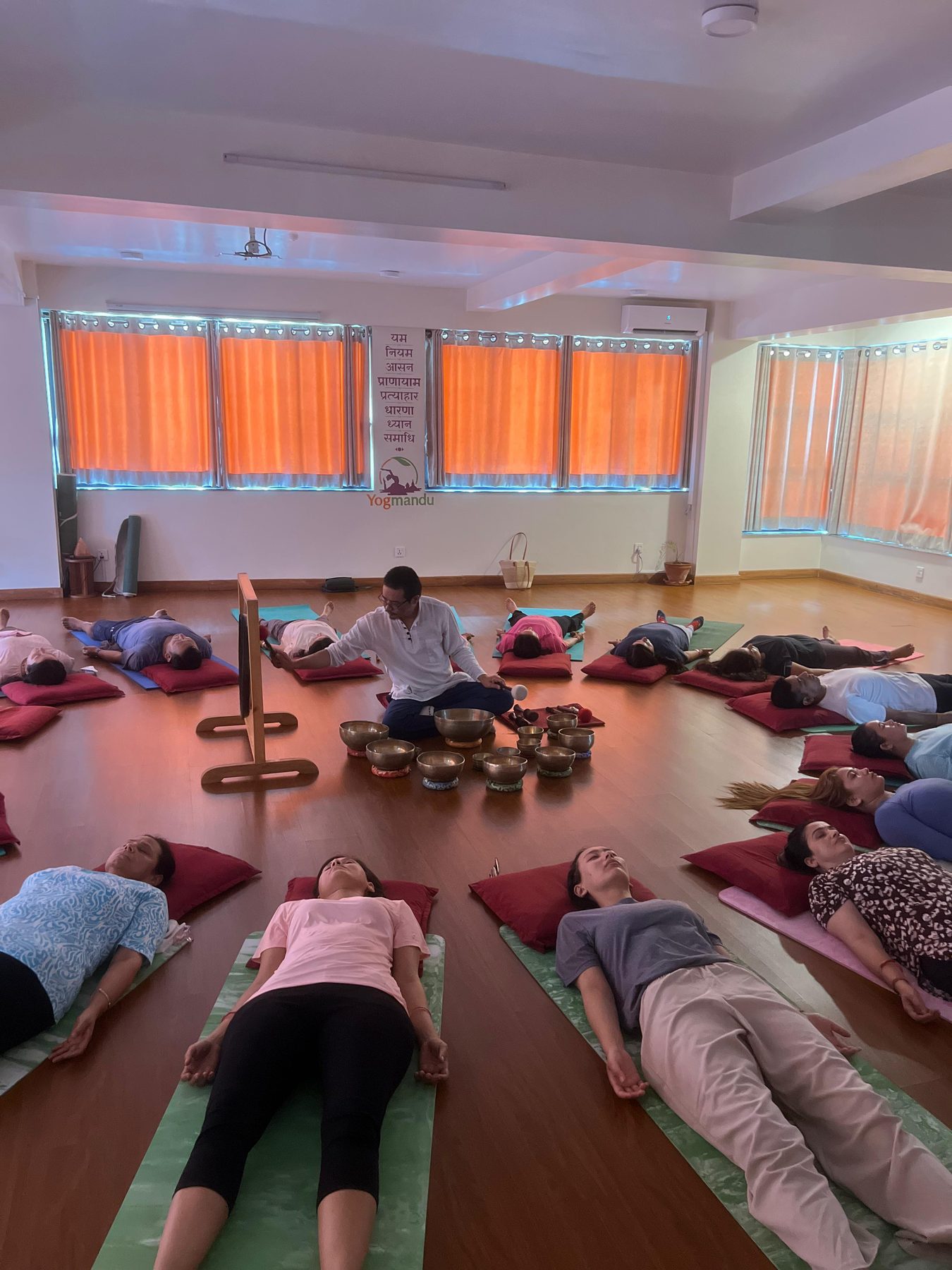
Sound. Many US studios now pair yoga nidra with a sound bath. In Kathmandu, the sound healing sessions work the same way: you lie down and do nothing at all.
Breath. If your mind races the moment you lie down, steady the breath first. A few minutes of Bhramari, the humming bee breath, makes the descent much easier.
Yoga nidra is part of the meditation teaching at Arjuna's studio in Kathmandu, and his meditation sessions also run live online on US time zones.
Questions people ask
Is NSDR the same as meditation?
Not quite. Meditation is usually done sitting and aims at sustained, alert attention. Yoga nidra and NSDR are done lying down and aim at deep physical rest with some awareness kept. Traditionally, yoga nidra is a preparation for meditation.
Can yoga nidra replace sleep?
No. It can help you recover from a short night and may help you fall asleep, but it does not replace sleep.
How long does a yoga nidra session last?
Traditional sessions run from about 20 to 45 minutes. NSDR scripts are often 10 to 20 minutes.
Study this in person
Classes, teacher training and retreats in Kathmandu, and live online sessions wherever you are.